


For years, Peru has built a solid position in international trade. Its export model, based on minerals and agro-industry, has allowed it to remain a relevant player in global markets.
However, the context is changing.
And with it, the rules of the game are also changing.
Today, the question is no longer whether Peru exports well…
but whether it is prepared to compete in a much more complex environment.
An export model that keeps working
Recent performance confirms the country’s strength in key sectors:
- Copper and gold continue to lead mining exports
- Fishing maintains its relevance in international markets
- Agro-exports such as cranberries, grapes, and avocados continue to grow and gain market share
This model has been efficient. It has generated growth, stability, and positioning.
But it has also created a clear dependence on commodities and primary products.
Global trade no longer rewards stability alone
The international environment has changed structurally.
Today, global trade is marked by:
- Nearshoring and relocation of production chains
- Geopolitical tensions affecting trade flows
- New supply chains that are more regional and resilient
In this scenario, countries that only export raw materials face growing pressure.
Because value is no longer solely in producing…
it lies in strategically integrating into the new dynamics of international trade.
The great challenge: moving from exporter to strategist
Peru has clear competitive advantages:
- Strategic location with access to the Pacific
- Broad network of free trade agreements
- Consolidated export experience
However, it also faces structural challenges that limit its evolution:
- Low diversification of the export supply
- Limitations in logistical infrastructure
- Still insufficient industrial scaling
This opens a key question for companies, exporters, and decision-makers:
Can Peru go beyond its role as a commodity exporter?
Where the real opportunities lie
The new map of international trade does not eliminate opportunities for Peru.
It redefines them.
The greatest opportunities lie in:
1. Diversification of the export supply
Expanding beyond traditional products toward sectors with higher value added.
2. Integration into new supply chains
Leveraging nearshoring to position itself as a strategic supplier in the Americas and Asia.
3. Market intelligence
The companies that are growing are not necessarily the largest, but those that best understand the market.
Knowing:
- Which products are growing
- Which countries are demanding
- Which competitors are entering
- At what prices negotiations are taking place
is what defines competitive advantage today.
The paradigm shift: from volume to information
International trade is no longer just a production competition.
It is an information competition.
In this new environment:
- Exporting more does not guarantee sustainable growth
- Having data does allow anticipating and making better decisions
That is why strategies based on market intelligence are making the difference between companies that grow… and companies that fall behind.
Conclusion: the future of Peruvian trade is defined today
Peru has shown that it can compete in global trade.
The next step is to demonstrate that it can evolve within it.
Because in a world where supply chains constantly change,
the advantage is no longer in what you export…
but in how you understand the market to which you sell.
Access the full analysis
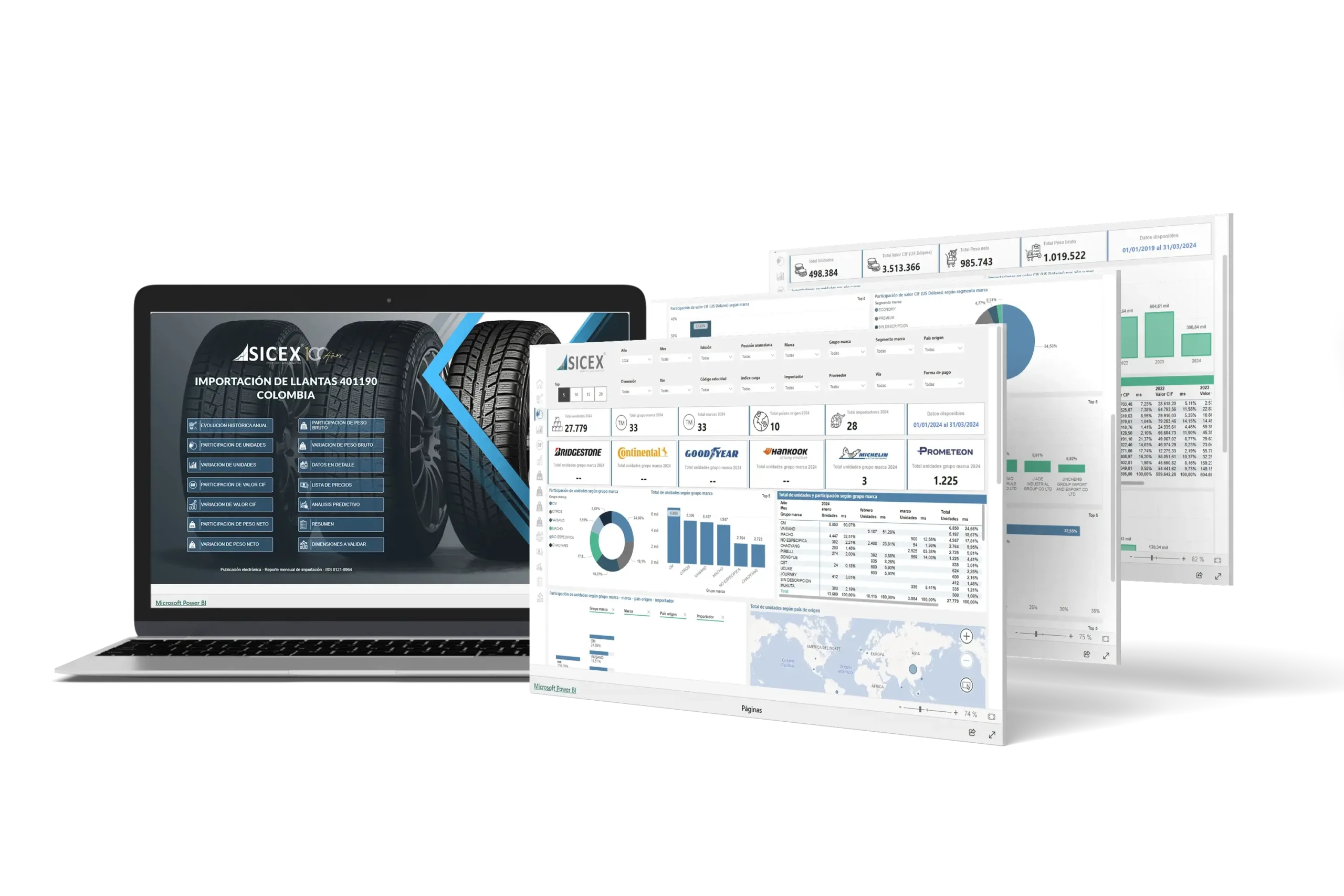
At SICEX, we analyze these dynamics with real foreign trade data to identify opportunities by sector and country.
Discover:
- Which sectors are setting trends
- Where the real opportunities lie
- What risks can affect competitiveness
👉 Read the full article at: www.sicex.com